
Website ADA Compliance & Accessibility
WCAG 2.2 Audits · Remediation · Ongoing Compliance Documentation
Which One Sounds Like You?
"We received a demand letter or lawsuit."
If you're being sued or you've gotten a letter alleging your website isn't accessible, you're likely on a clock. Courts and plaintiffs' attorneys pay attention to whether an organization is making a genuine, documented effort to fix the problem — not just claiming compliance after the fact.
You need:
- Audit your site against WCAG 2.2 and identify the specific barriers named or implied in the complaint
- Prioritize and fix the issues that carry the most legal exposure first
- Document every step — what was found, what was fixed, and when — so you have a clear record
- Draft or update your accessibility statement
"We need to protect our funding."
If you're a nonprofit, community health center, or public-facing organization receiving federal or state funding, accessibility isn't optional — it's often tied directly to Section 504, Section 508, or grant compliance requirements. Losing that funding over a website issue is a preventable problem.
We help you:
- Audit against the specific standard your funding requires (typically WCAG 2.2 AA)
- Fix the barriers that put your funding or grant reporting at risk
- Build accessibility documentation you can hand to auditors, board members, or funders on request
- Set up ongoing monitoring so a plugin update or new webpage doesn't quietly undo your compliance
We are not attorneys, and this isn't legal advice — you should loop in your lawyer on the legal strategy. What we can do is get you real, documented technical progress fast, which is usually exactly what your attorney needs from you.
We Build It In From the Start — or Fix It After the Fact
New websites
We help you design and build accessible websites from day one — so you can reach more people and avoid costly fixes later
Existing websites
We audit, remediate, and document your current site so you can move forward with greater accessibility and peace of mind.
How We Work
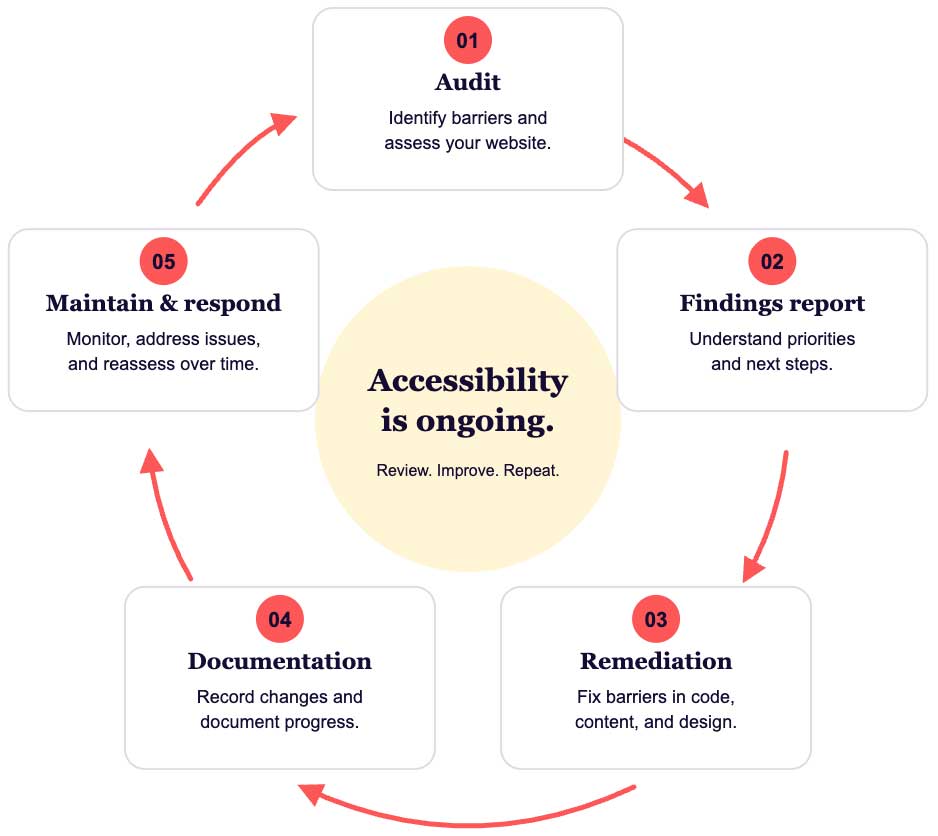
Audit → Report → Fix → Document → Maintain & Respond
What We Also Review
PDFs and Downloads
Video and Audio
Forms & Booking Tools
Maps and Embeds
Third-Party Plugins
The right support for your website
Pricing starts at $1,500. Scope follows your needs.

Rapid Response Audit
Get a focused audit with clear, prioritized findings so you can take action quickly.

Compliance Audit + Remediation
A comprehensive audit and hands-on fixes to address accessibility issues across your site.

Ongoing Accessibility Partnership
On-going support to keep your website accessible as your content and tools evolve.

Accessible Website Design & Build
Thoughtful, accessible design and development for organizations that want to get it right from the start.
Need something more specific?
Staff training, PDF accessibility, third-party vendor review,and more.

Who This Is For
Business owners who want an inclusive, lower-risk website
Nonprofits & community organizations
Health centers and care providers
Teams planning a new website
What You'll Walk Away With
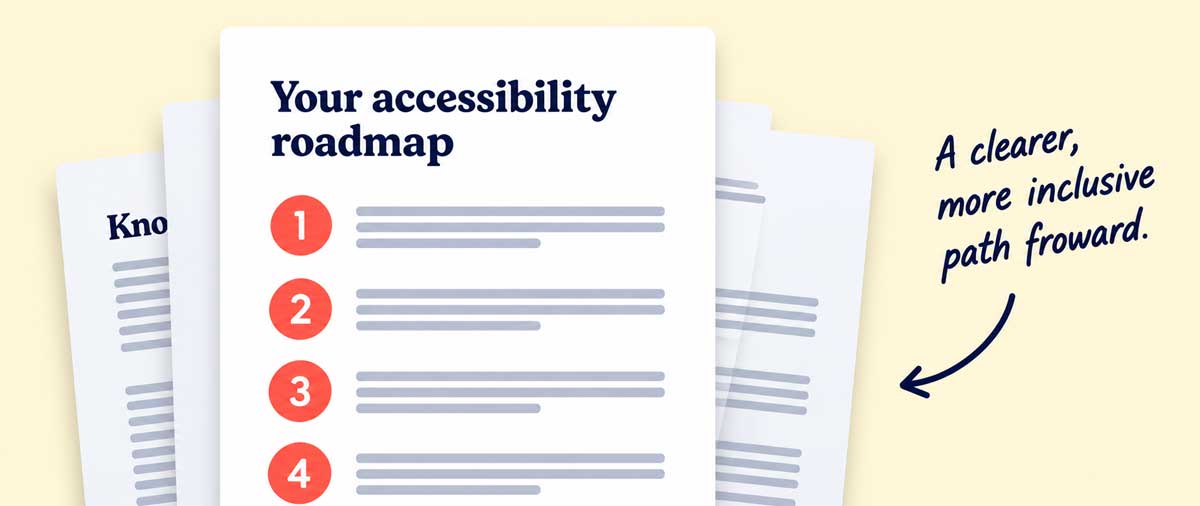
A prioritized findings report
A practical remediation plan
Clear documentation
A plan for ongoing accessibility
A Word on Compliance
We're upfront about this: no one can guarantee permanent, universal compliance across every device and assistive technology combination — standards and technology keep evolving. What we can deliver is a thorough audit, real fixes, and a documented, good-faith effort that holds up over time.
This service supports WCAG 2.2 and Section 504/508 accessibility improvement. It is not legal advice, legal certification, or litigation support. If you're facing a lawsuit or demand letter, talk to your attorney about legal strategy — we handle the technical and documentation side.
Ready to Get Ahead of This?
Whether you're responding to a complaint or protecting funding you can't afford to lose, the first step is the same: find out exactly where your site stands.